Across the metaCCAZE project, cities are developing and deploying innovative mobility solutions to make urban transport cleaner, safer and more efficient.
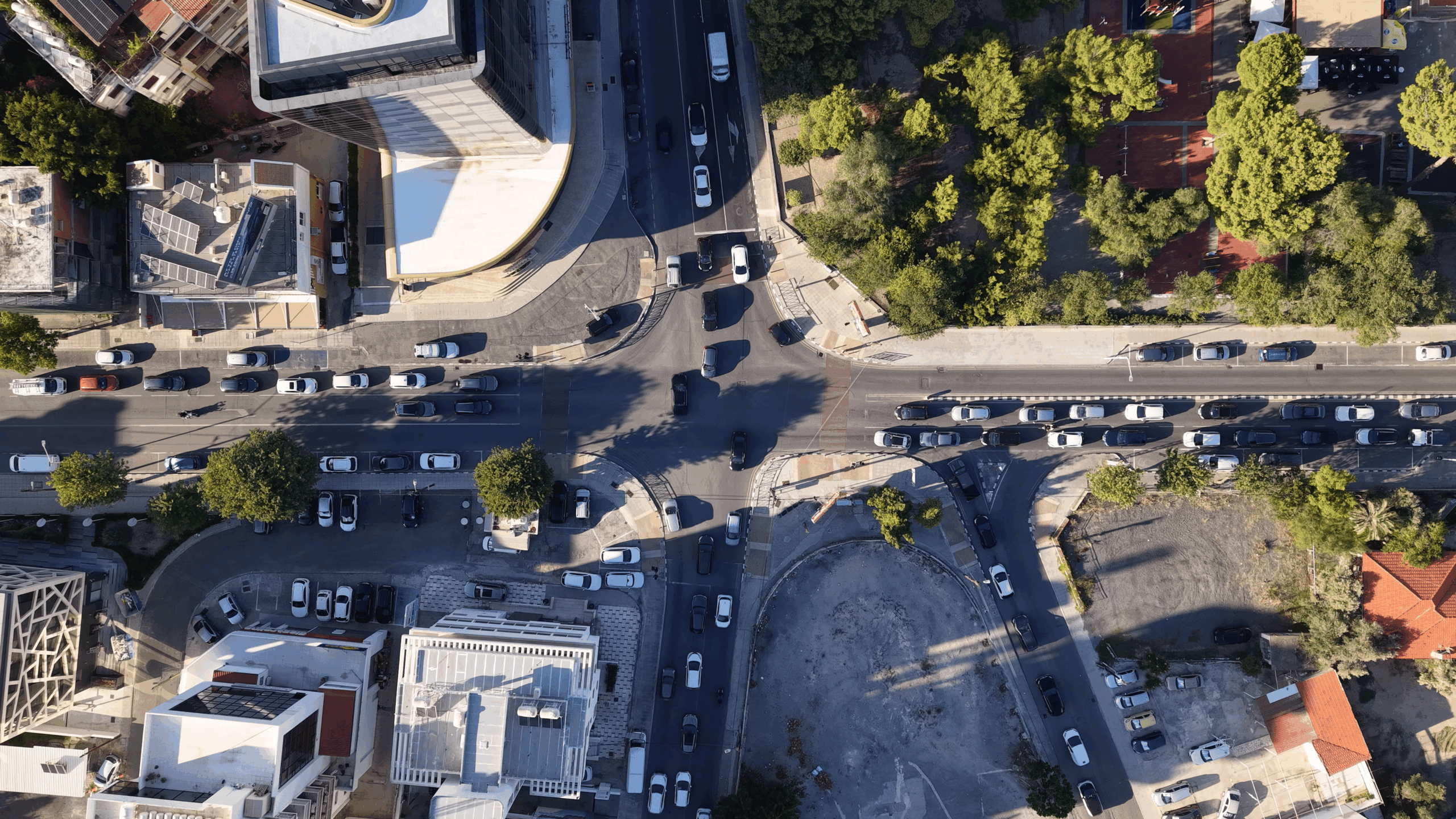
In Limassol and Kraków, project partner MobiLysis conducted drone operations before and after the deployment of key mobility services. This allows the Living Lab partners to compare mobility patterns, assess how the solutions interact with their urban environment and identify opportunities for further improvement.
MobyLisis is a start-up based in Lausanne, Switzerland. It collects and analyses immense urban traffic data using a swarm of drones to understand mobility dynamics at play. In the metaCCAZE cities of Limassol and Kraków, Moblysis deployed 5 drones in each city, with one certified drone pilot assigned to each drone.
Coordination is organised through pre-defined flight plans, which are distributed to the pilots in advance and tailored to the specific requirements and objectives of each mission. At the end of each operational day, Mobylsis hold a debriefing with the pilots to review the data collection, discuss any operational challenges and determine whether adjustments to the flight plans or setup are needed for the following day.
Limassol: supporting the development and operation of WeeDRIVE
MobiLysis conducted two rounds of drone operations in Limassol, in March 2025 and October 2026. The campaigns collected high-resolution traffic and congestion data around key hotspots for the city’s on-demand mobility service.
Between the two drone campaigns, Limassol officially launched WeeDRIVE, an on-demand minibus service, on 6 October 2025. The app-based service provides teenagers with flexible transport to school and after-school activities, offering families an alternative to individual car journeys.
The first drone operation supported the preparation of the service. Traffic counts collected by MobiLysis helped MaaSLab run simulations and assess suitable locations and operating conditions before the launch of WeeDRIVE.
During both campaigns, the collected footage was processed using MobiLysis’ computer vision algorithms to extract the trajectories of vehicles, pedestrians and users of soft mobility modes. The analysis examined traffic flows and interactions around service hotspots, helping identify potential bottlenecks and safety risks.
The second drone operation took place after WeeDRIVE had been operating for approximately one year and had expanded to include scheduled school rides. The new data therefore provide the Living Lab partners with an opportunity to assess traffic conditions following deployment and continue improving safe and efficient pick-up and drop-off operations.
Kraków: Monitoring mobility before and after the launch of LajkHub
In Kraków, MobiLysis carried out two rounds of drone experiments, in September 2025 and October 2026. Coordinated drone swarms collected data on bicycle and vehicle movements around the Kraków Grzegórzki railway station and surrounding urban areas.
The analysis covered cycling routes with and without dedicated bicycle infrastructure, as well as busy intersections. By extracting detailed trajectories, MobiLysis assessed interactions among cyclists, vehicles and other road users and identified potential safety issues.
Between the two drone operations, the city deployed its new mobility services. On 30 September 2026, Kraków opened LajkHub, a mobility hub near Hala Targowa and the SKA Grzegórzki transport interchange. The hub combines public transport connections with two new services: the Park-e-Bike electric bike rental service and the LajkBike Cargo cargo bike lending service.
The first drone operation provided baseline information on bicycle demand, route use and traffic interactions before these services became available. The second operation, conducted shortly after the opening of LajkHub, captured mobility patterns following deployment.
Comparing the two datasets will help the Kraków Living Lab partners understand how the new e-bike and cargo-bike services interact with existing traffic and cycling infrastructure. The findings can support the safe operation and further development of LajkHub.
Turning drone observations into practical support for cities
Through these operations, MobiLysis supports the Living Lab partners throughout different stages of mobility solutions deployment. The first campaigns established baseline conditions and informed the planning of the mobility solutions. The second campaigns captured conditions after deployment, creating an opportunity to compare changes and identify where operations or infrastructure could be improved.
In both cities, drone-based monitoring turns detailed traffic observations into practical evidence for safer, smarter and more sustainable mobility.
More about the metaCCAZE Trailblazer City, Limassol
Alongside the on-demand minibus service WeeDRIVE and the shared e-bikes service, the metaCCAZE partners in Cyprus are co-developing two additional innovative services to reduce peak-hour traffic and urban congestion:
- A multimodal passenger hub
- An integrated Internet of Things (IoT) platform for energy and transport
Read more about our Trailblazer City, Limassol here.
More about our Follower City Kraków:
As part of metaCCAZE, an innovative transport hub is created in the center of Kraków, including a new cargo bike station near the railway viaduct and Miodowa Street. This enables the development of environmentally friendly, quiet, and zero-emission freight transport within the Second Ring Road. The cargo bikes are managed using modern IT tools and supported by artificial intelligence, which helps to organise an efficient delivery network – an attractive alternative to the current costly and burdensome solutions. Learn more here.