Amsterdam is the capital and largest city of the Netherlands, known for its historical significance, cultural heritage and economic importance. It is one of the most densely populated areas in Europe and attracts millions of visitors each year. Amsterdam is characterised by diversity, progressivism and active citizen engagement, playing a significant role both in national politics as well as in shaping social and cultural trends.
Challenges
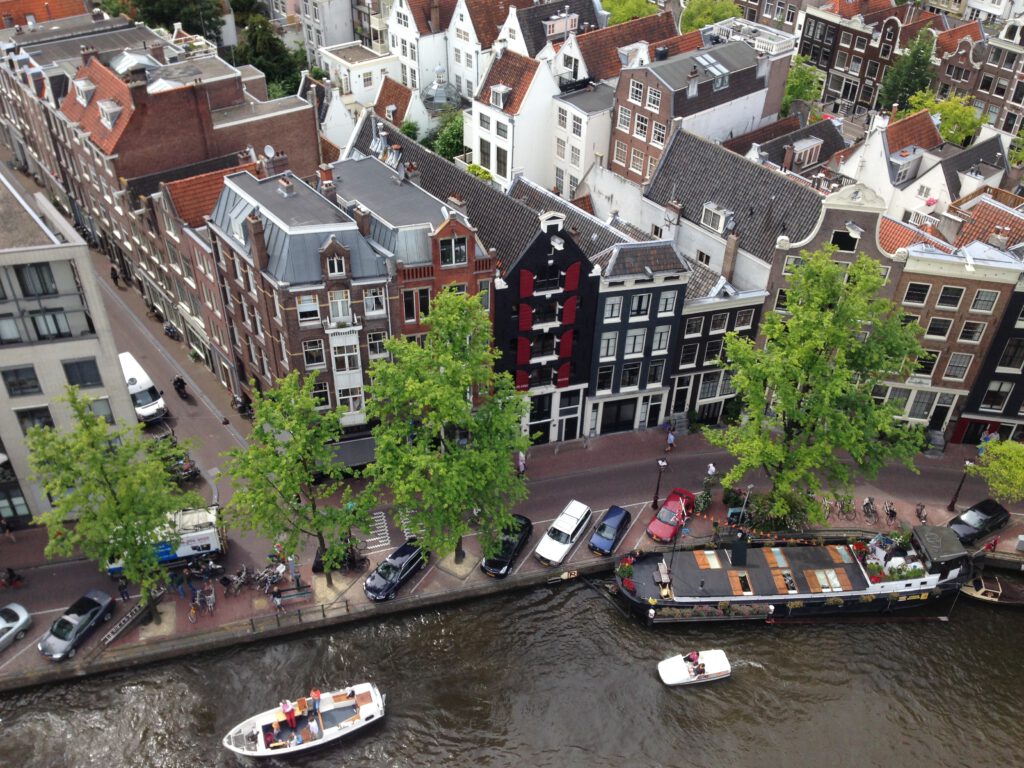
While the number of trips in Amsterdam for both people and logistics grows at an unprecedented pace, the city itself does not have the space to grow. This puts pressure on the already scarce public space. The growing popularity of electrified micro mobility adds to the many modes of mobility that must share the same space.
Sharing the same space at different speeds increases the dangers for other road users like cyclists and pedestrians on the narrow streets of Amsterdam. Meanwhile the increasing number of logistic trips puts a weight like never before on the centuries-old quay walls along the Amsterdam canals, increasing their risk of collapse.
Use cases
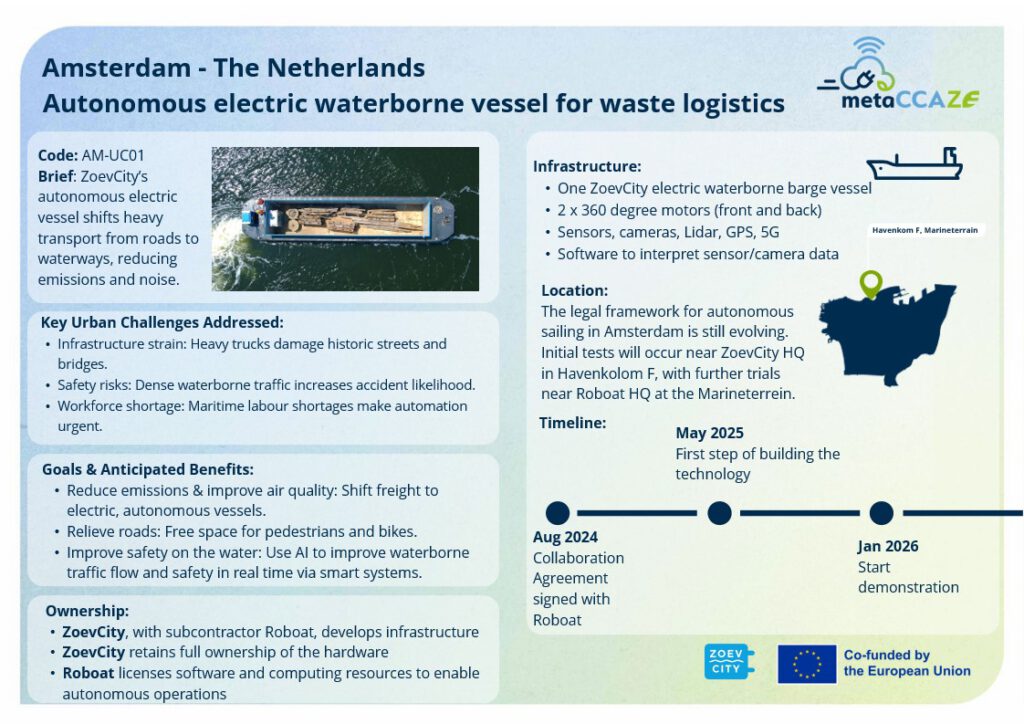
Autonomous electric waterborne vessel for waste logistics
The dynamic curbside management system uses real-time data & sensors to improve space use and urban logistics. A zero-emission rickshaw tests sensors and alignment with semi-automated rickshaw in a non-public test field.
Read more here.
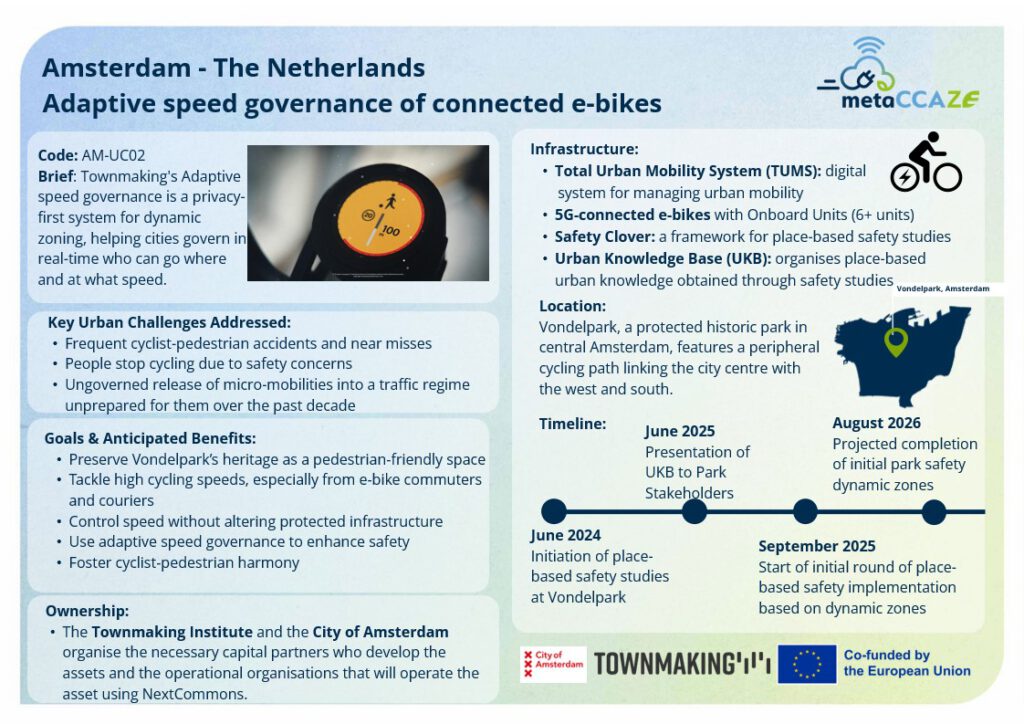
Adaptive speed governance of connected bikes
Townmaking’s adaptive speed governance is a privacy-first system for dynamic zoning, helping cities govern in real-time who can go where and at what speed.
Read more here.
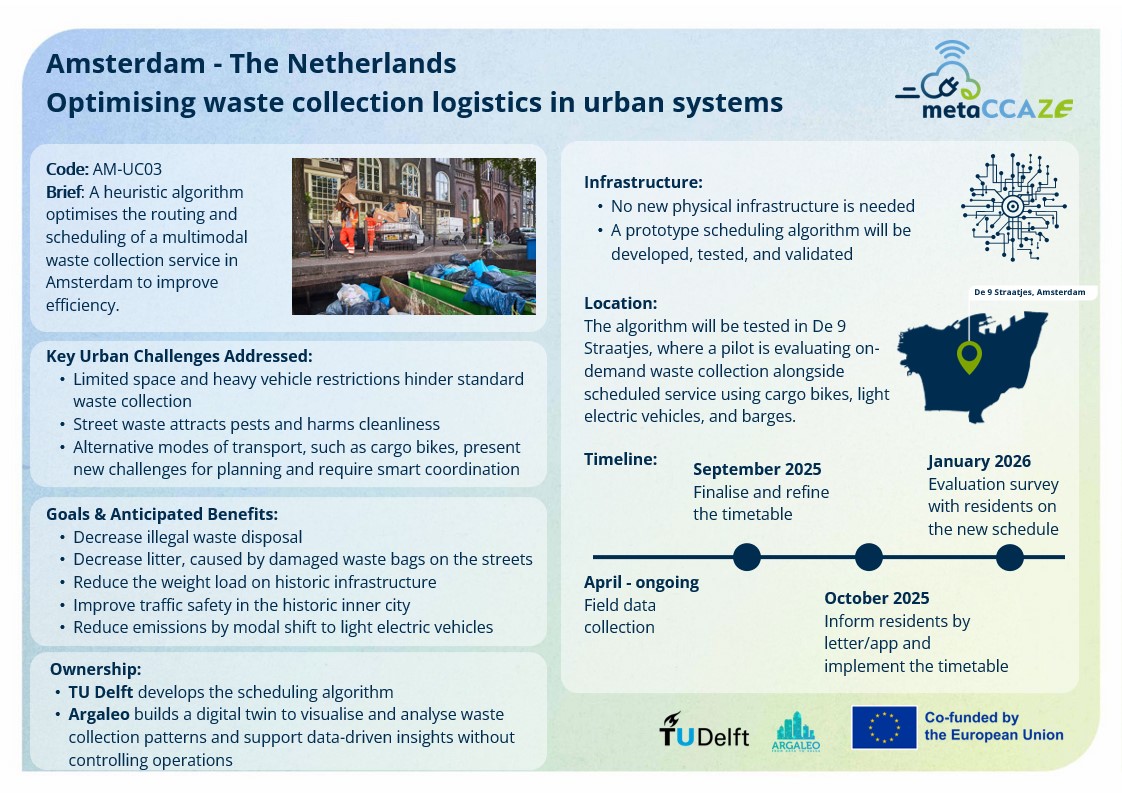
Optimising waste collection logistics in urban systems
A heuristic algorithm optimises the routing and scheduling of a multimodal waste collection service in Amsterdam to improve efficiency.
Read more here.
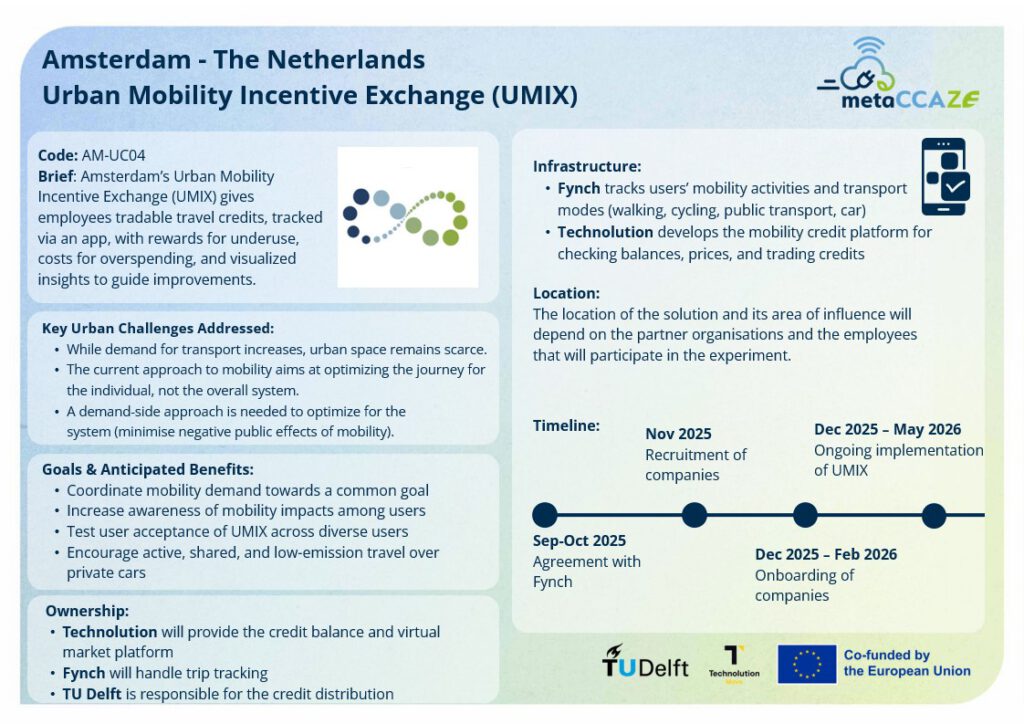
Urban Mobility Incentive Exchange (UMIX)
Amsterdam’s Urban Mobility Incentive Exchange (UMIX) gives employees tradeable travel credits, tracked via an app with rewards for underuse, costs for overspending, and visualised insights to guide improvements.
Read more here.
Role of the living lab in metaCCAZE
The Amsterdam Living Lab and case study demonstrates cutting-edge technologies in support of safe, autonomous, connected and zero emission solutions for better urban liveability, in line with the aims of the metaCCAZE project.
The Living Lab serves not only as a demonstration of what is technologically possible, but also as a testbed for what is socially acceptable and desirable, by involving end users in the design and implementation process. The vision beyond the project, is that the lessons learned in metaCCAZE will be safeguarded by urban planners and policy makers in Europe and beyond and that successes are scaled and adopted widely when planning for liveable cities.
Living Lab partners