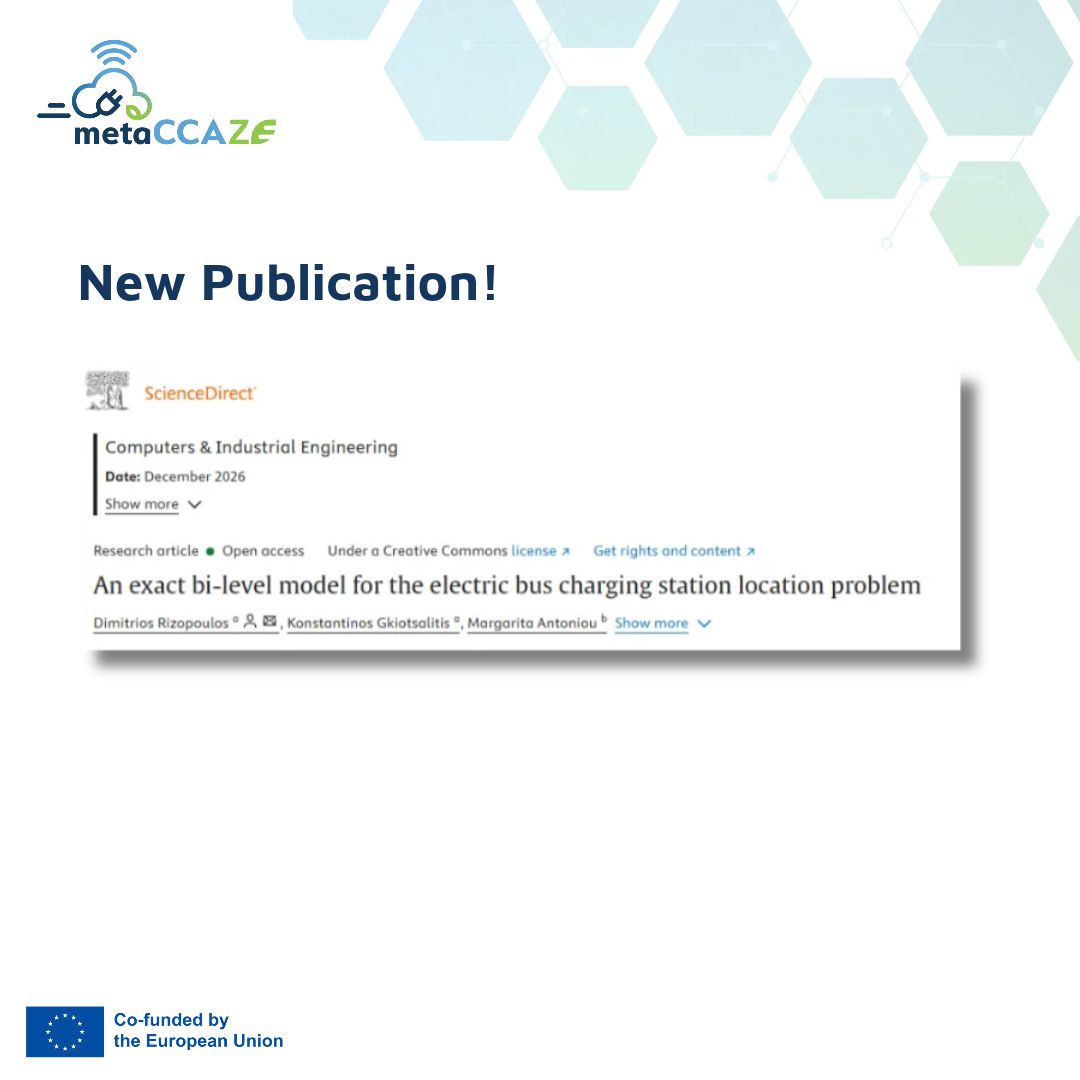
Based on the paper: An exact bi-level model for the electric bus charging station location problem
Electrifying public bus fleets can reduce urban emissions, but deciding where to install charging stations is far from straightforward. Bus operators need affordable infrastructure, reliable schedules, and minimal out-of-service travel to chargers, while energy authorities must manage electricity demand, pricing, and the use of renewable energy. These decisions are closely connected, yet they are often made separately.
This study introduces a planning model that considers both perspectives simultaneously. It determines where slow and fast chargers should be installed, assigns buses to them, schedules charging throughout the day, and accounts for changes in electricity prices. Unlike conventional approaches that optimise the bus operator’s decisions alone, the model represents the interaction between the operator and the energy authority and identifies an exact, jointly beneficial solution.
The model was tested using real public transport data from Limassol, Cyprus, covering eight bus lines and a fleet of 33 buses. Compared with planning from the bus operator’s perspective alone, the coordinated solution reduced the operator’s overall cost measure by 12.63% and daily charging costs by 18.76%, while slightly increasing the use of renewable energy. These results are achieved while the decision support model guarantees that the profitability of the energy authority for the specific Business-to-Business (B2B) contract with the electric bus fleet operator remains above a specific threshold. In the bigger picture, the results show that closer coordination between public transport and energy stakeholders can support more economical and sustainable charging infrastructure.
Read the full paper
Rizopoulos, D., Antoniou, M. & Gkiotsalitis, K. (2026). An exact bi-level model for the electric bus charging station location problem. metaCCAZE. Horizon Europe Grant No. 101139678. https://doi.org/10.1016/j.cie.2026.112349
NTUA’s role in metaCCAZE
The Department of Transportation Planning and Engineering at the National Technical University of Athens (NTUA) is a globally recognised center of excellence in transport research and innovation. Its mission is to educate transport engineers and advance science in transport planning and engineering. In metaCCAZE, NTUA is the technical coordinator and leads WP2, focused on developing an open, smart toolkit that integrates electrification, automation, and connectivity to support zero-emission shared mobility systems.