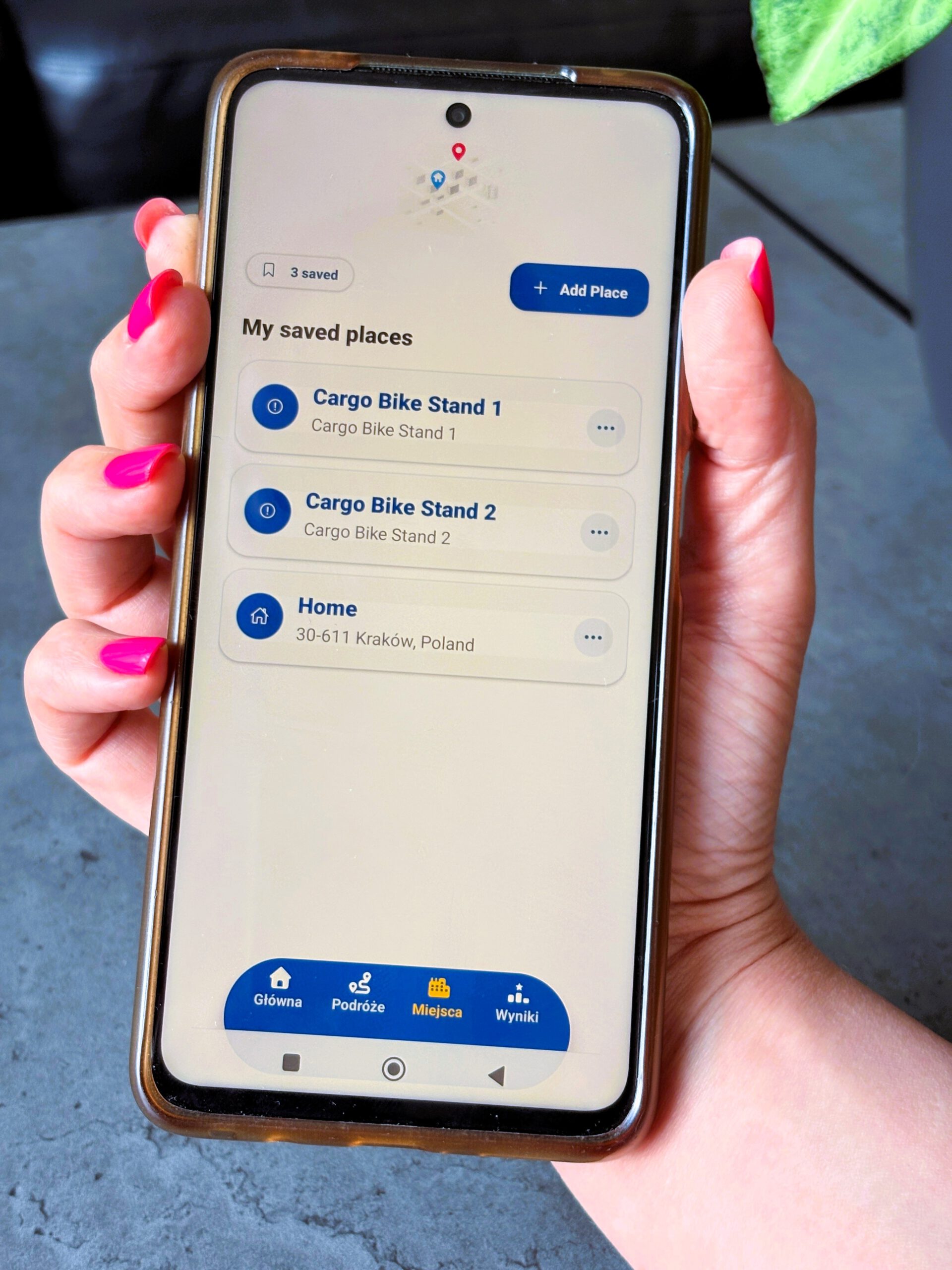
Our Follower City Kraków is taking another step towards smarter and more sustainable urban mobility with the launch of a new travel diary application developed within metaCCAZE.
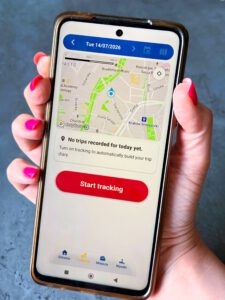
The application, now in its operational version, will help researchers better understand the daily transport choices of Kraków residents, with a particular focus on cycling behaviour and mobility patterns across the city. Users can record their journeys through an easy-to-use interface featuring trip tracking, saved locations such as home addresses and cargo bike stations, travel statistics, user profiles, and tutorial sections explaining how to maintain a travel diary.
The collected data will be combined with information gathered through drone observations to support the design and optimisation of the upcoming Kraków LajkHub Cargo as well as similar mobility hubs planned in other European cities.
Following the completion of internal testing and further refinements together with technical partners from Cyprus, the city plans to launch the study with residents by the end of the summer. Participants will be invited to track their travel behaviour for one week and complete surveys before and after the introduction of the new cargo bike rental service.
Alongside the app rollout, Kraków is also preparing a cargo bike training programme for future users of the LajkBike Cargo fleet. The first training sessions are planned during European Mobility Week in September as part of the city’s 10th Great Ecology Lesson near the Tauron Arena.
Residents will have the opportunity to test cargo bikes under the guidance of experienced instructors and learn how to safely operate this new form of urban transport. Successful completion of the training will provide access to Kraków’s cargo bike rental service, with additional sessions planned throughout the year.
More about our Follower City Kraków:
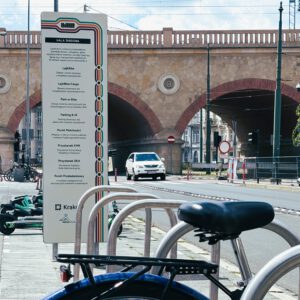
As part of metaCCAZE, an innovative transport hub will be created in the center of Kraków, including a new cargo bike station near the railway viaduct and Miodowa Street. This will enable the development of environmentally friendly, quiet, and zero-emission freight transport within the Second Ring Road. The cargo bikes will be managed using modern IT tools and supported by artificial intelligence, which will help organise an efficient delivery network – an attractive alternative to the current costly and burdensome solutions. Learn more here.