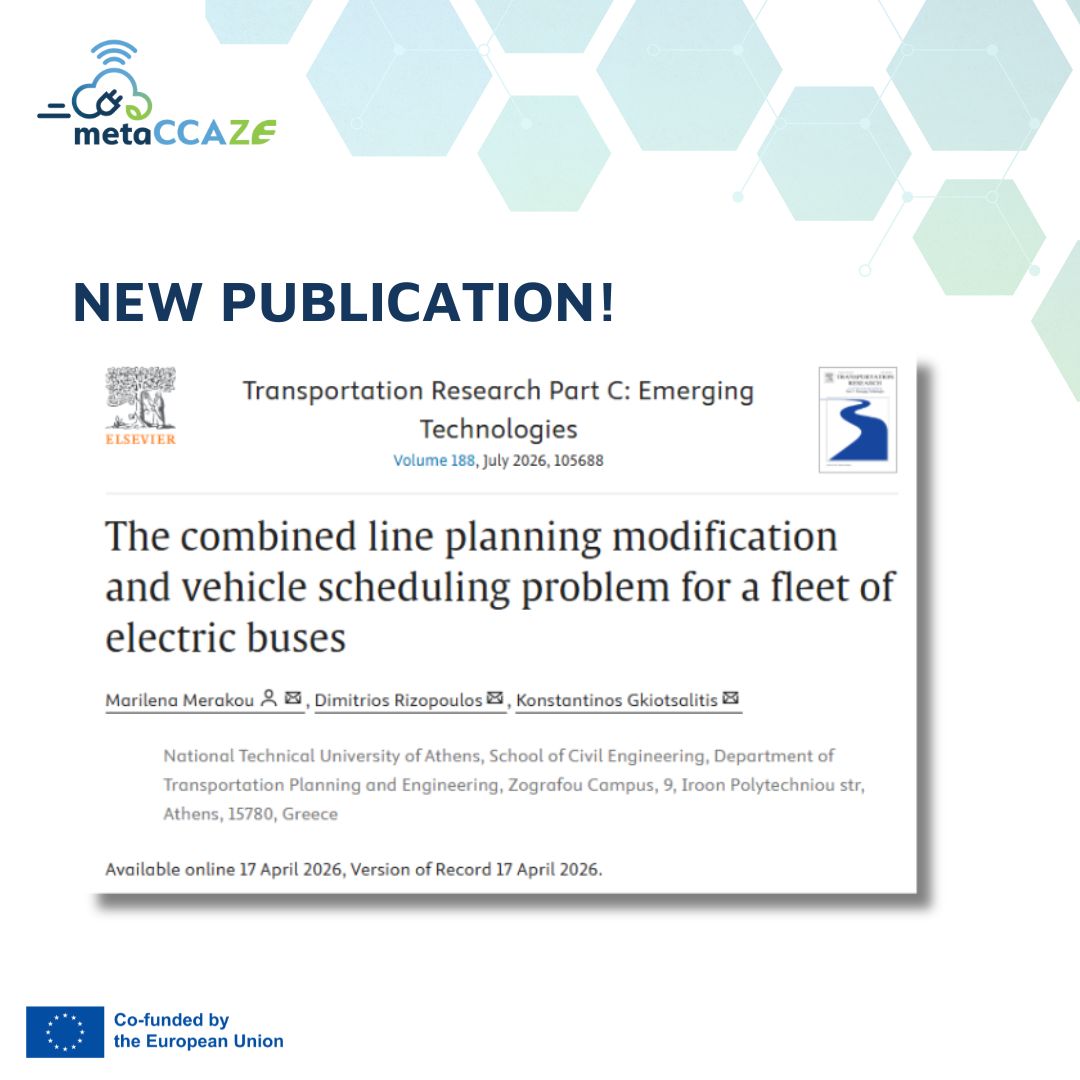
As European cities accelerate the shift toward zero-emission mobility, one major challenge remains: how can public transport systems transition to electric buses without compromising service quality or significantly increasing operational costs?
A newly published scientific study offers valuable insights into this question through an innovative optimization framework designed to support the integration of electric buses into existing transport systems.
The research introduces a two-stage optimization model that helps transport planners identify the most efficient strategies for electrifying bus fleets while balancing passenger demand, route coverage and fleet size. In the first stage, the model evaluates potential modifications to existing bus lines — including the strategic removal of selected stops — while solving the Electric Vehicle Scheduling Problem (E-VSP) under real-world operational constraints such as vehicle range, timetables, daily trip requirements and deadheading distances. In the second stage, the framework determines the optimal network configuration by minimizing both unserved passenger demand and the number of electric buses required.
To demonstrate its practical application, the model was tested in two real-world case studies in Athens, Greece, and Limassol, Cyprus.
Key Findings from Athens and Limassol
In Athens, results revealed a clear trade-off between service coverage and fleet requirements:
- Major line modifications allowed operations with 52 electric buses but left 477 passengers unserved.
- Increasing the fleet to 56 buses reduced unserved passengers to 173.
- Maintaining the full existing network without modifications required 60 buses and ensured complete service coverage.
Notably, a conventional diesel fleet could operate the same network with 43 vehicles — highlighting the additional operational demands currently associated with electric fleet adoption.
In Limassol, similar trade-offs emerged:
- A minimum fleet of 38 electric buses resulted in 288 unserved passengers.
- Operating the existing network without service reductions required 42 buses.
These findings underline the strategic decisions cities must make when balancing operational efficiency, sustainability goals and passenger accessibility.
Supporting Sustainable Urban Mobility in Europe
The study provides transport authorities and city planners with a practical decision-support tool for navigating the complexities of public transport electrification. By quantifying the relationship between route design, fleet size and service quality, the research contributes to more informed, data-driven mobility planning.
For projects like metaCCAZE, which aims to accelerate connected, automated and zero-emission mobility solutions across Europe, such evidence-based approaches are essential for enabling scalable and citizen-centred transitions.
As cities continue modernising their transport systems, research like this demonstrates that successful electrification requires not only technological innovation, but also strategic network redesign and careful operational planning.
Read the full paper
Merakou, M., Rizopoulos, D., & Gkiotsalitis, K. (2026). The combined line planning modification and vehicle scheduling problem for a fleet of electric buses. metaCCAZE. Horizon Europe Grant No. 101139678. https://doi.org/10.1016/j.trc.2026.105688
NTUA’s role in metaCCAZE
The Department of Transportation Planning and Engineering at the National Technical University of Athens (NTUA) is a globally recognised center of excellence in transport research and innovation. Its mission is to educate transport engineers and advance science in transport planning and engineering. In metaCCAZE, NTUA is the technical coordinator and leads WP2, focused on developing an open, smart toolkit that integrates electrification, automation, and connectivity to support zero-emission shared mobility systems.