Disclaimer: This is not a long story short. It is just a long one. But a true one.
When I was tasked to write something for International Women’s Day, I was very excited at first, and then spiralled into a writer’s block. For weeks. That it almost became pathological.
Would I be able to present evidence without being obvious? To capture the layered realities we live as women, and represent my female peers and colleagues with dignity? To get the attention of my male peers and colleagues without looking cheesy? What is there even to celebrate on this day?
Some might argue that nothing is to celebrate as long as key inequalities still exist, and I agree: it is rather about remembering and acknowledging.
If we rewind the tape of the last 150 years of history, we remember that women couldn’t vote, stand for parliament, or receive proper medical attention; couldn’t wear certain clothes or get divorced; couldn’t own property, access fair legal support, or claim equal pay; and were not allowed in certain public spaces, attend university, or enter certain professions.
Thankfully—and here we fast forward—movements for women’s suffrage gained momentum in the late 19th century. Women’s involvement in society became more prominent during the two World Wars, when they not only served as nurses but also stepped into roles traditionally held by men, including factory workers, engineers, transport operators, and government clerks (yay! Girls in STEM). Then the student and sexual revolutions of the ‘60s- ‘80s, the legal reforms on divorce and reproductive rights, and other cultural and political movements led to the progressive changes that make our European and western societies what they are today: more democratic and just.
Is this the real life? Is this just fantasy?
Something between the two. While we cannot deny the achievements of the past century and a half (it would be a problem if we did), geographic, economic, and cultural differences mean that the rights we fought for are not distributed equally. And just as things are best hidden in plain sight, it is precisely within our democratic privileges that details are overlooked, and the real difficulties women face become merely a side effect of the fast-paced society we live in.
What do writers do when they have a block? They describe the reality they know, and blend it with anonymity. So will I – for an article that was never supposed to be soft, but rather honest and impactful.
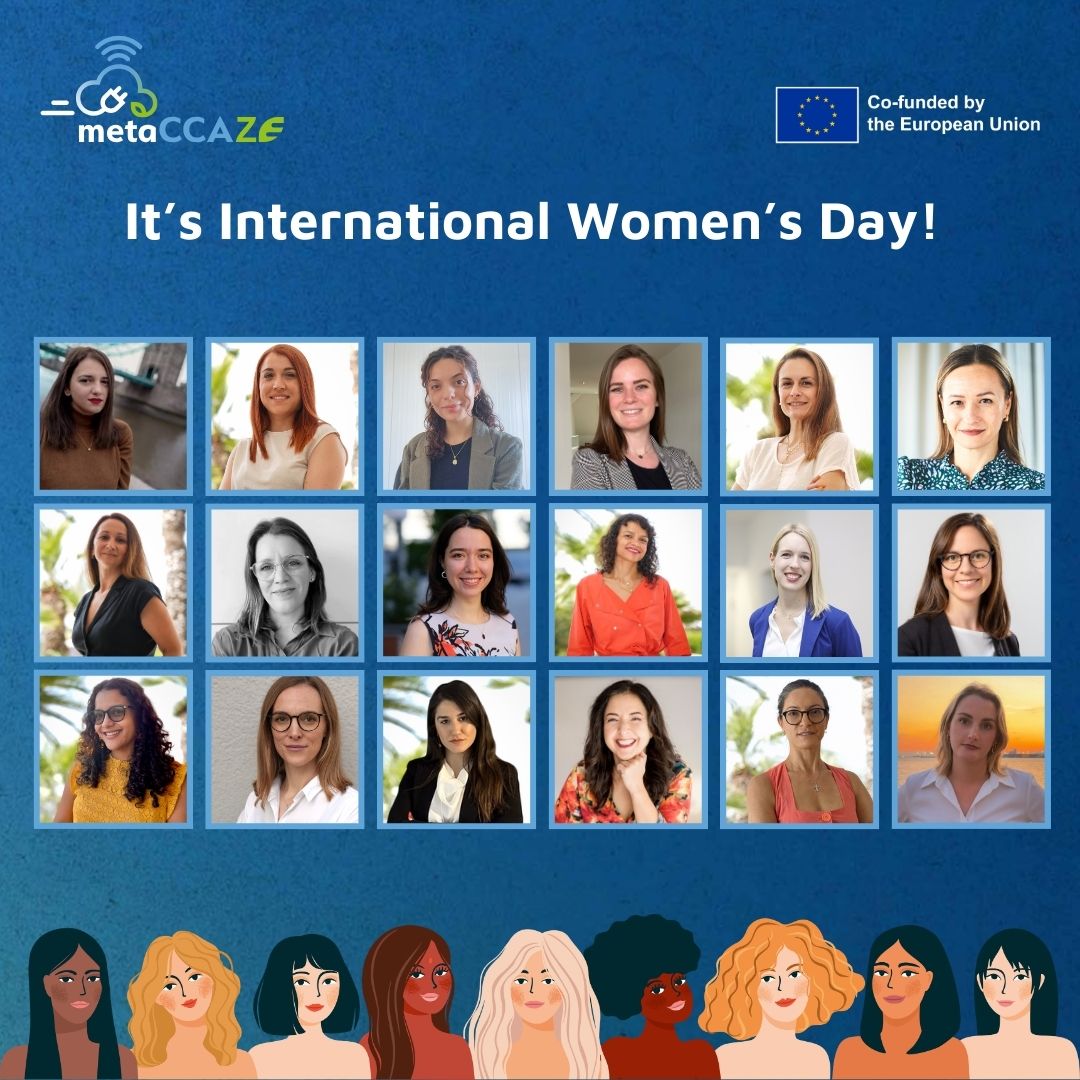
In my career, I was always very lucky to work alongside very competent women, and the metaCCAZE consortium is not an exception. Managers, transport engineers, social scientists, planners, professors, PhD students. Different ages, nationalities, backgrounds, personalities. The forceful and outspoken, the kind and introverted, the hybrid (vehicles) of expertise and modesty. The mothers whose kids pop up like flowers during web meetings; the sisters, the aunts, the friends, the partners who tend not just their own garden.
When asked about whether they have ever felt not listened to or treated differently because of being a woman, and whether they experienced any privileges compared to their female peers, some reflect on the subtle challenges of being young and female in their fields, noting that they often had to be exceptionally well-prepared, confident, and clear to be heard equally.
“While I might address others formally, I am occasionally addressed more casually or mistaken for someone more junior. These details may seem small, but they shape how authority and expertise are perceived.”
At the same time, they acknowledge privileges like international exposure, flexible working arrangements, and opportunities to contribute meaningfully, recognizing that not everyone has access to these advantages.
Others emphasize that, while they rarely felt actively ignored, they did notice differences in treatment, in male-dominated environments. Examples like more informal and cooperative interactions among male colleagues are dynamics that can create obstacles in professional collaboration.
“My husband is also an engineer, and I have noticed that some of our male colleagues prefer to contact him to discuss or organize action plans, even when I am directly involved. This can be discouraging, as it shifts professional communication away from the person responsible.”
Still, some report positive experiences in both mixed-gender and all-female teams, with opportunities for responsibility and project management based on skill rather than gender.
What they like about their jobs?
“I love project work—it’s flexible and diverse, with evolving tasks that allow me to drive solutions toward project goals. I enjoy problem-solving and sharing success stories with interested partners. Taking responsibility for my projects while having supportive colleagues and sparring partners in my team is invaluable.”
Plus, collaborating across geographies and generations, remote work for balancing family life, and the opportunity to implement solutions.
…And, for the sake of gossip, aren’t you curious to know also what they don’t like?
The occasional underestimation as a young woman. Navigating lengthy processes in a large organization and managing frequent business travel alongside personal responsibilities. Or chronic illnesses. Micromanagement. Some male colleagues who dare to take credit for your work, or others who interrupt you or do not respect your turn when speaking – whether you are keeping your hand raised in a room full of supposedly polite people or, metaphorically, online. Seniors who treat you like a secretary rather than a team member. Being given responsibility for difficult work but not ownership of the decisions, and not being taken seriously despite being the one competent on the topic.
These are all reasons why, when dreaming about improvements they would like to see for the next generations, the emphasis is on the importance of building girls’ confidence from an early age. Providing role models within families, where mothers should have equal opportunities as fathers to pursue their careers, including fair pay and childcare support.
“In schools, there should be a targeted effort to strengthen girls’ self-esteem in mixed classes. Strong women’s networks, women-friendly investors, and success stories of empowered women are essential—so that gender quotas become unnecessary.”
In the workplace, the hope that talent and impact are recognized more naturally, while women are encouraged to own their results and communicate achievements confidently. Supporting working mothers across sectors, allowing them to balance maternity responsibilities and professional growth without undue burden.
“Freelance women often face significant challenges. When they give birth, they should be able to remain at home for a reasonable period without the added burden of continuing to cover their insurance contributions.”
And if you dared to ask and to listen, the conversation could go on and on and on. Certainly, not the same as your attention span. To conclude, I will share one last bit of wisdom:
“My hope is that future professionals will still be ambitious and proud of their work—but won’t need to fight as hard to prove that they deserve their seat at the table.”
Mine, dear friend, is that as long as that seat is not there, we jump directly on the table.
Thanks to all the metaCCAZE women who, like puzzle pieces, contribute to giving shape and meaning to this project.
Author: Martina Ferrara Snider (ERTICO)