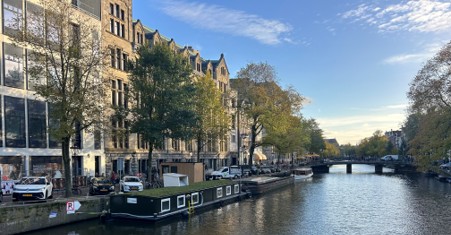
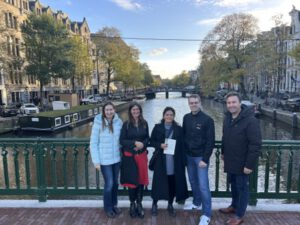
On 28 October, the metaCCAZE team from AMS Institute and TU Delft visited the City of Amsterdam’s waste collection pilot at Singel 213. The visit offered an opportunity to learn about the current operation and discuss how waste collection and logistics could evolve in the city’s historic centre.
Narrow streets, ageing quay walls and limited space make conventional waste collection with heavy trucks challenging. Underground waste containers, widely used elsewhere in Amsterdam, are also not feasible in many parts of the historic centre.
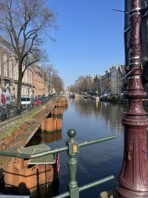
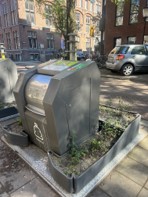
The municipal pilot explores an alternative approach combining light electric vehicles, cargo bikes and a waste collection vessel to reduce reliance on heavy vehicles, transport waste via water and improve local waste collection. The residents in the area have currently three options to dispose of their waste: drop it off at a large barge, make an appointment to have their waste picked up or come to one of the scheduled stops of the waste collection round of the electric van.
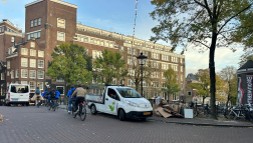
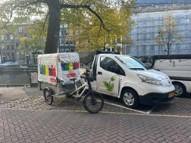
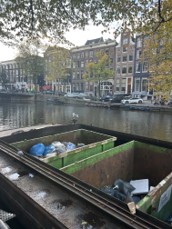
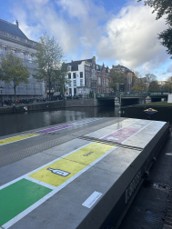
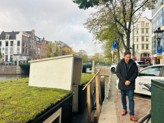
The experience so far highlights the importance of collaboration and iterative testing when developing innovations before expanding them to other parts of the city. Feedback from residents and businesses has led to improvements designed to increase acceptance of the collection point and vessels. The staff boat now has a green roof and has been painted dark green, to match the colour of the water of the canal. The city also plans to replace the current vessel with a 14-metre vessel carrying ten waste containers compatible with conventional waste-emptying systems. Collection shifts have been optimised and based on operational experience. While challenges remain, most residents have responded positively to the collection system. The pilot has also fostered personal connections between waste collectors and residents, as well as stronger connections within the collection team and among residents, who meet each other when they come to one of the stops of the waste collection round.
Other priorities include reducing operational costs, increasing capacity through waste compression and exploring how the approach could be extended to other locations in the city.
The pilot illustrates the City of Amsterdam’s iterative approach to innovation: testing solutions in practice, learning from operational experience and residents’ feedback, and refining the system over time. These steps contribute to a longer-term vision for more efficient and sustainable waste collection in the city centre.
Within metaCCAZE, AMS Institute and TU Delft support this development by exploring and testing ways to optimise the system in line with the city’s 2030 vision: waste collection vessels that allow direct drop-off, fit beneath the city’s bridges, integrate with existing waste collection systems and use compression to increase capacity, supported by more efficient logistics.
Article by: Juanita Devis and Neeltje Pavicic
More about metaCCAZE Trailblazer City, Amsterdam
The Amsterdam Living Lab in metaCCAZE focuses on developing and testing innovative solutions for sustainable urban mobility. By leveraging the city’s unique canal system and exploring smart technologies, the lab aims to reduce congestion, improve air quality, and optimise public space usage, making Amsterdam a model for future urban environments. Find out more here.