A lot has already happened this year in our Trailblazer City Munich, highlighting strong progress in sustainable urban logistics and stakeholder engagement.
In mid-October last year, Munich’s cargo bike logistics hub hosted the cargo bike program “flottes Gewerbe” which aims to encourage businesses to incorporate cargo bikes into their commercial fleet: Eight Munich-based businesses were given the opportunity to test cargo bikes free of charge over several weeks in their daily operations. The programme kicked off with a dedicated Cargo Bike Action Day at the hub, where the bikes were officially handed over. Representatives from the Chamber of Industry and Commerce (IHK) and the Chamber of Crafts (Handwerkskammer) contributed opening remarks, followed by test rides for participants and visitors.
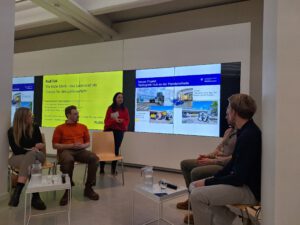
This initiative translated directly into impact: after completing the test period, two cargo bikes were purchased, demonstrating how hands-on experience can accelerate the uptake of innovative solutions. Munich is not only testing solutions but also actively fostering dialogue. On 20 November, the city hosted the panel discussion “Radltalk”, bringing together experts and stakeholders to exchange perspectives on the future of cycling logistics and sustainable urban transport.
The city’s activities are also attracting international attention. A Portuguese journalist travelled to Munich to report on the Radlogistik Hub as a best-practice example for addressing similar mobility challenges in Lisbon. The article was published in the digital journal Mensagem, underlining Munich’s growing role as a reference city for innovative logistics solutions.
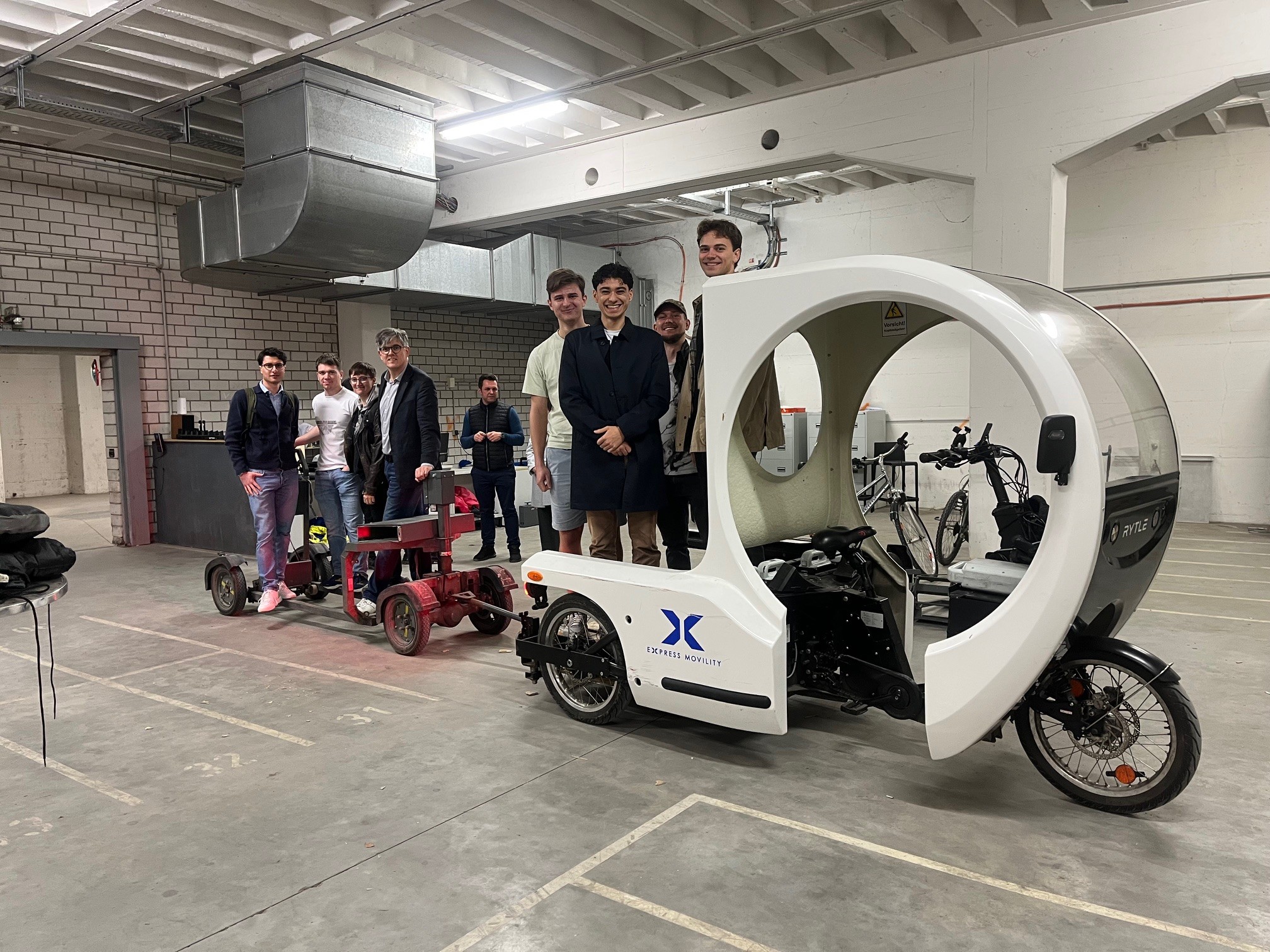
Engagement with academia is another important pillar. On 10 March 2026, Prof. Dr.-Ing. Axel Leonhardt from the University of the Bundeswehr Munich visited the hub together with eight students. The visit combined a tour of the facilities at the Paketposthalle with practical insights into logistics operations provided by project partner B4B Logistics.
From local business pilots to international recognition and academic exchange, Munich demonstrates how real-world testing, collaboration and knowledge sharing can drive the transition towards more sustainable and efficient urban logistics systems.
More about the Living Lab in Munich
Munich plays a key role in metaCCAZE as one of the four Trailblazer Cities, leading the way in bike logistics innovation. The city’s Multimodal Bike Logistics Hub aims to demonstrate how cargo bikes can become a viable alternative to traditional delivery vehicles, reducing congestion and emissions in urban areas. In metaCCAZE, the City of Munich is cooperating with several partners, including the Technical University of Munich, Stadtraum, B4B Logistics, Smart City System Parking Solutions GmbH and DB Schenker. Learn more about Munich’s role as a Trailblazer City Munich here.