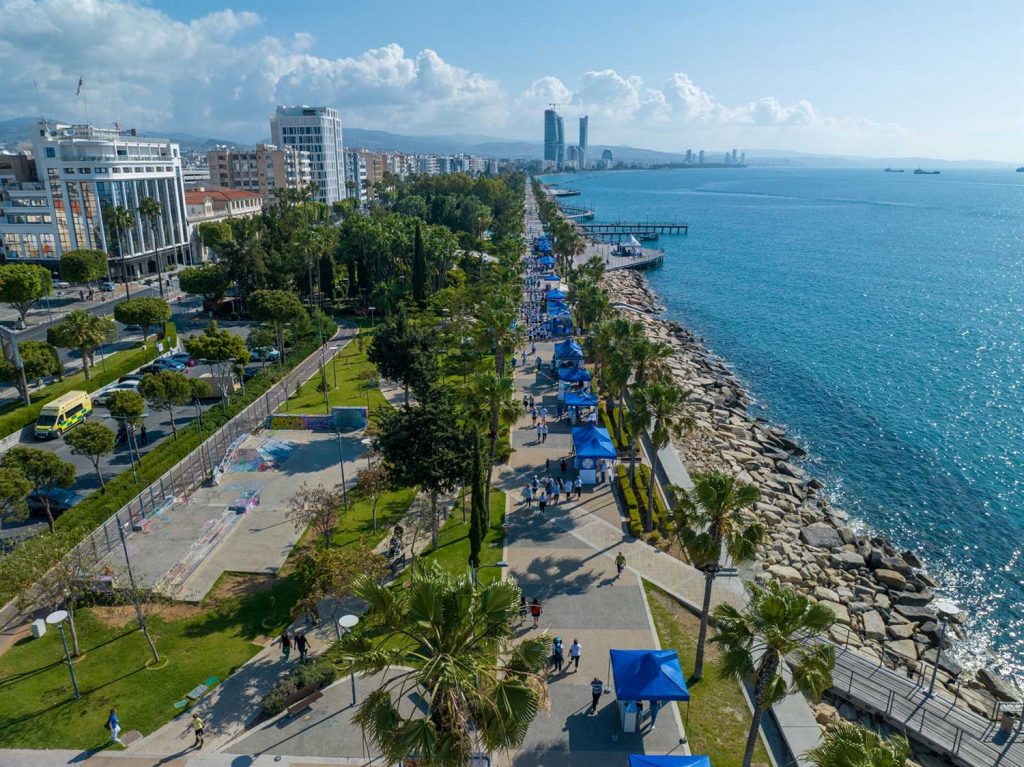
Limassol, a coastal city located on the southern coast of Cyprus, is the second-largest city in the country, with a population of 240,000.
The city is experiencing rapid economic and social changes, it has witnessed a massive development into an economic and touristic center and experienced a construction boom. However, this progress is not yet reflected in the transport system which remains car-dominant.
Challenges
Use cases
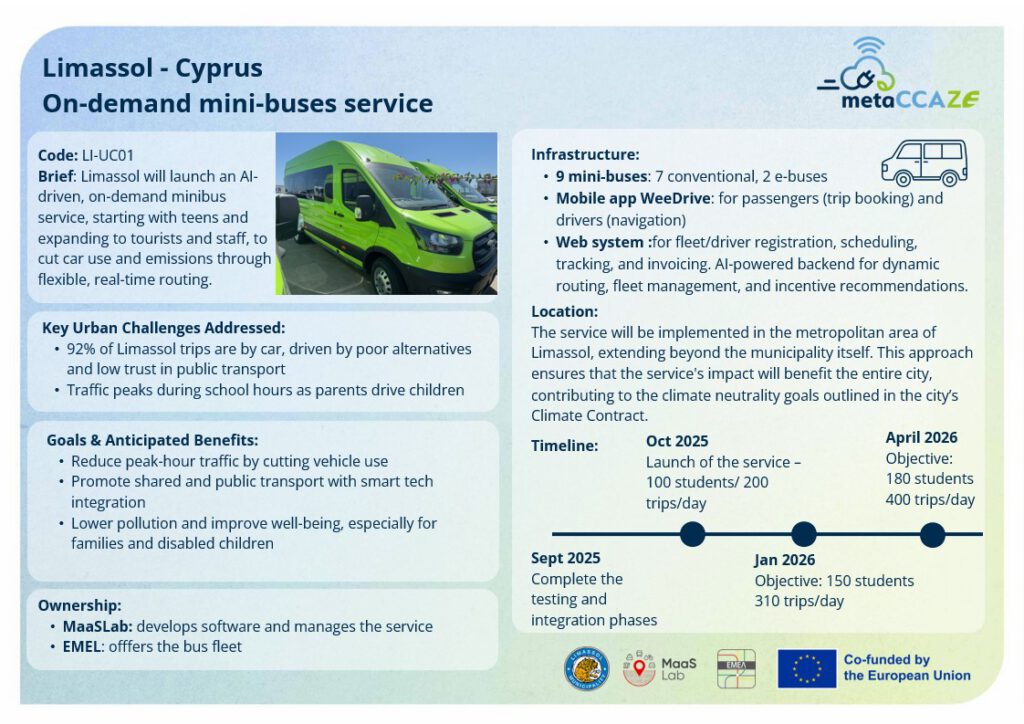
On-demand mini-buses service
Limassol will launch an AI-driven, on-demand mini-bus service, starting with teens and expanding to tourists and staff, to cut car use and emissions through flexible real-time routing.
Read more here.
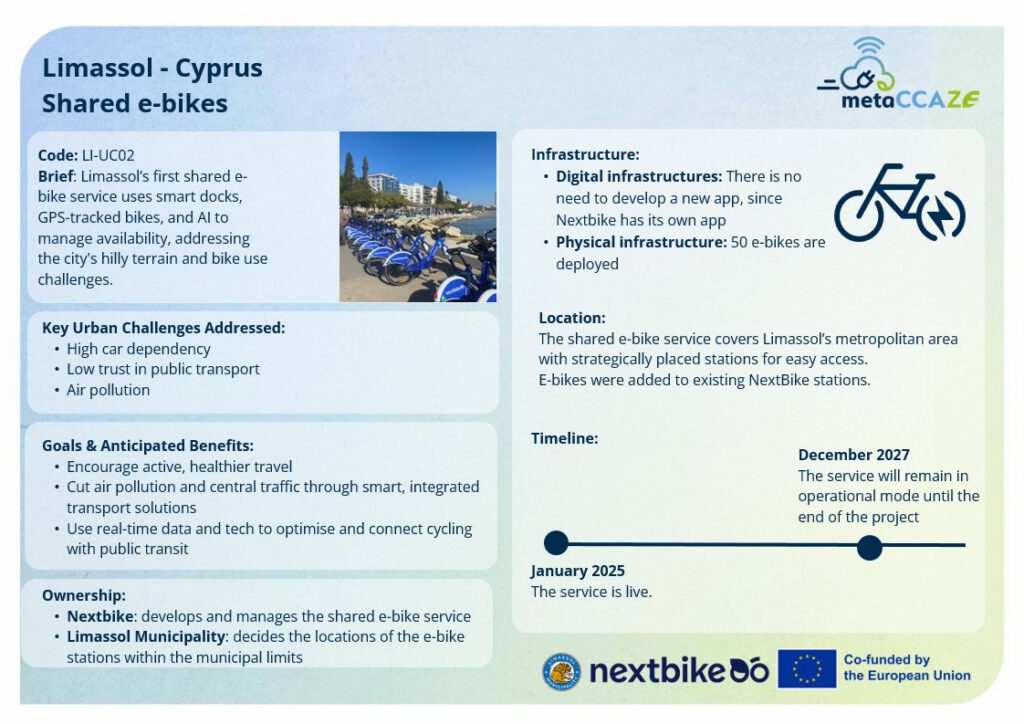
Shared e-bikes
Limassol’s first shared e-bike service uses smart docks, GPS-tracked bikes, and AI to manage availability, addressing the city’s hilly terrain and bike use challenges.
Read more here.
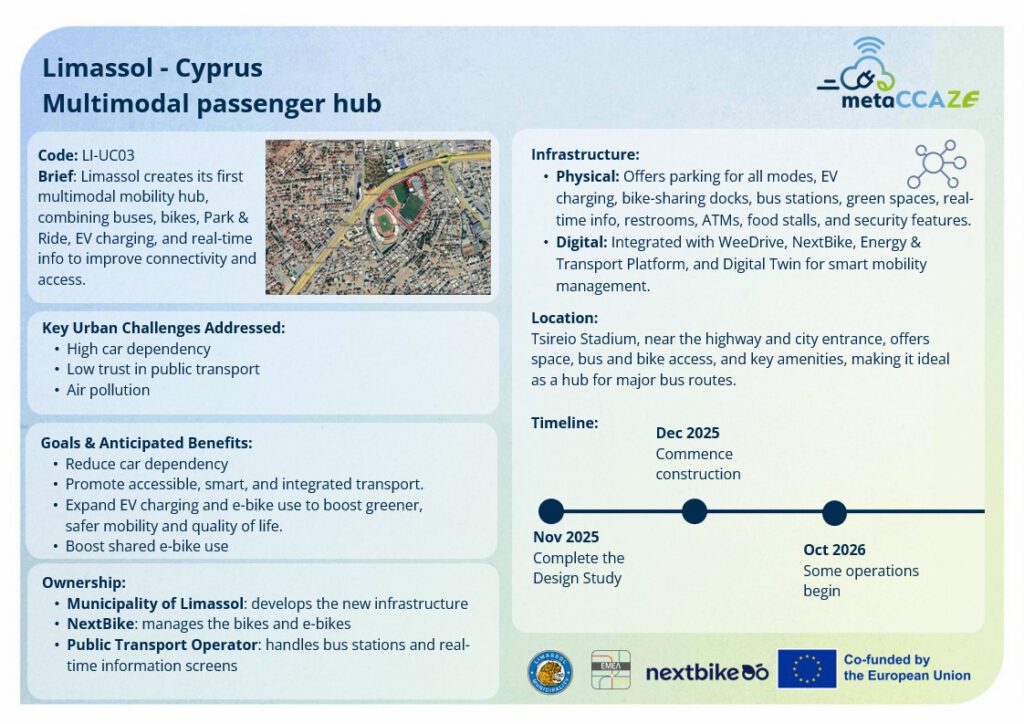
Multimodal passenger hub
Limassol creates its first multimodal mobility hub, combining buses, bikes, Park & Ride, EV charging and real-time info to improve connectivity and access.
Read more here.
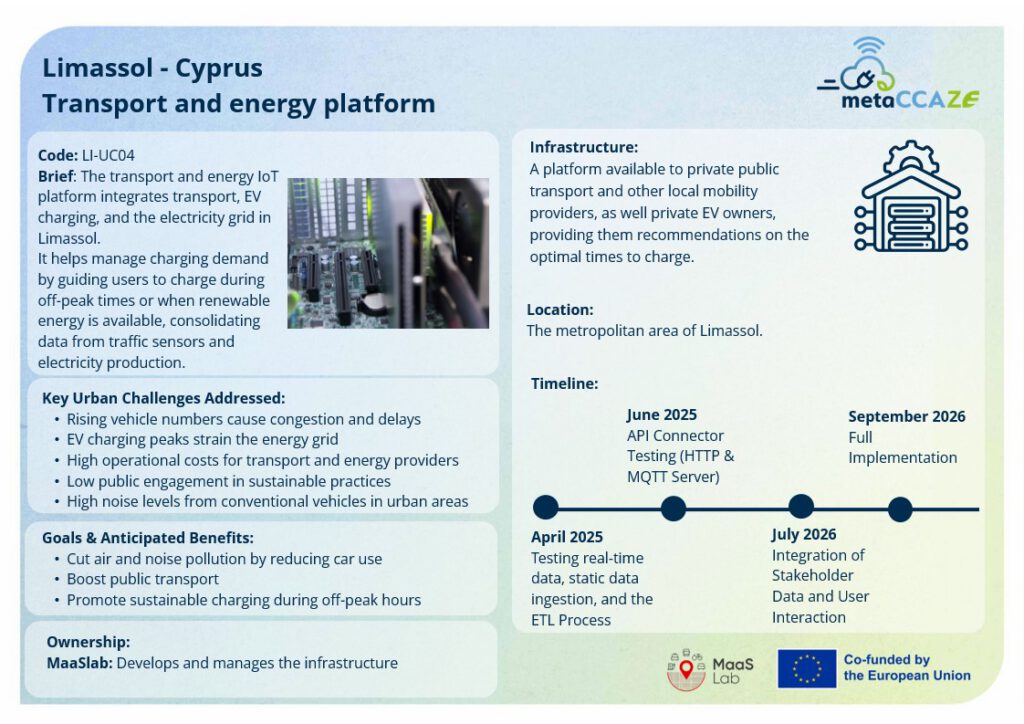
Transport and energy platform
The transport and energy IoT platform integrates transport, EV charging, and the electricity grid in Limassol. It helps manage charging demand by guiding users to charge during off-peak times or when renewable energy is available, consolidating data from traffic sensors and electricity production.
Read more here.
You are currently viewing a placeholder content from YouTube. To access the actual content, click the button below. Please note that doing so will share data with third-party providers.
More InformationRole of the living lab in metaCCAZE
Limassol, through implemented use cases, envisages hosting a city-wide demonstration of co-designed shared zero-emission services and aims to accelerate the deployment of smart systems that combine electric, automated and connected mobility and related infrastructure.
Living Lab partners





Contact
- Prof. Maria Kamargianni
- m.kamargianni@maaslab.org